How Many Watts Does a Washing Machine Use?
Whether you’re a large family doing daily laundry or an individual running smaller loads a few times a week, knowing how many watts your washing machine consumes, how much it costs, and how to reduce the bill (spoiler: consider using a solar washing machine) can save you tons of money over the years.
Read on to learn more about washing machines’ energy consumption and how solar washing machines have become a great saving solution for many households.
How Much Energy Does a Washing Machine Use?
The washing machine’s electricity consumption varies from home to home, depending on the type of machine, washing mode and temperature, load size, and efficiency.
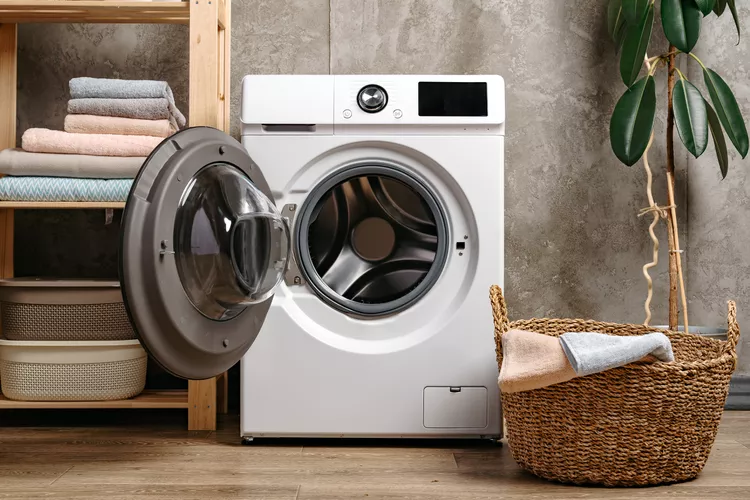
Source: REALSIMPLE
On average, a modern washer uses between 400 and 1400 watts per cycle. However, actual energy consumption is typically measured in kilowatt-hours (kWh) per load.
- Standard washing machine: 0.6 – 1.3 kWh per load
- High-efficiency washing machine: 0.3 – 0.5 kWh per load
For a family that runs about 5 loads per week, the annual power consumption can range from 80 to 340 kWh, depending on local electricity rates.
What Factors Affect Washing Machine Electricity Usage?
1. Washer type
There are two primary types of washing machines for home usage:
- Front-loading washing machines
- Top-loading washing machines
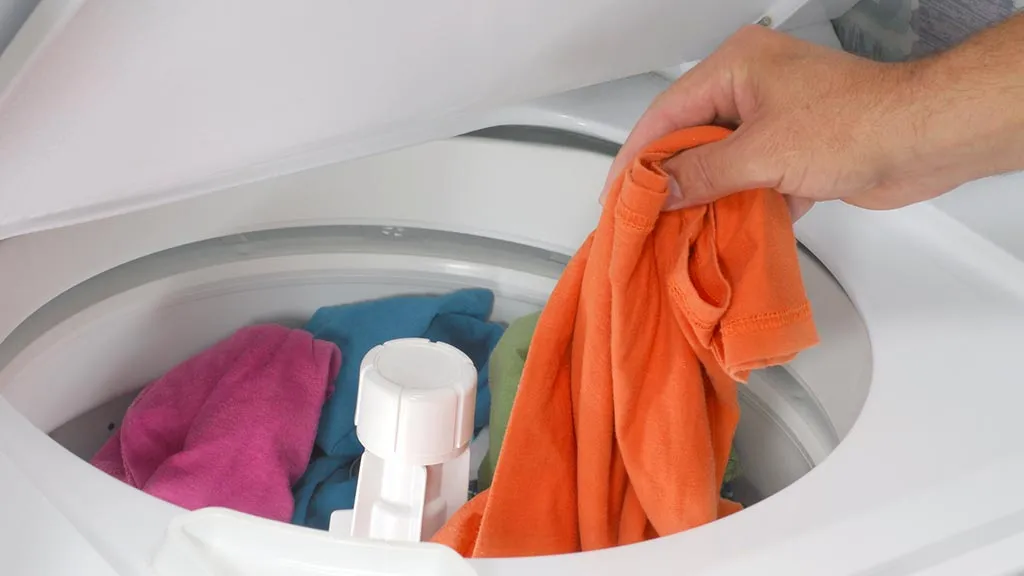
Source: Choice
Front-loading washers are generally more efficient, using less water and electricity because they rely on tumbling rather than an agitator.
2. Water Temperature
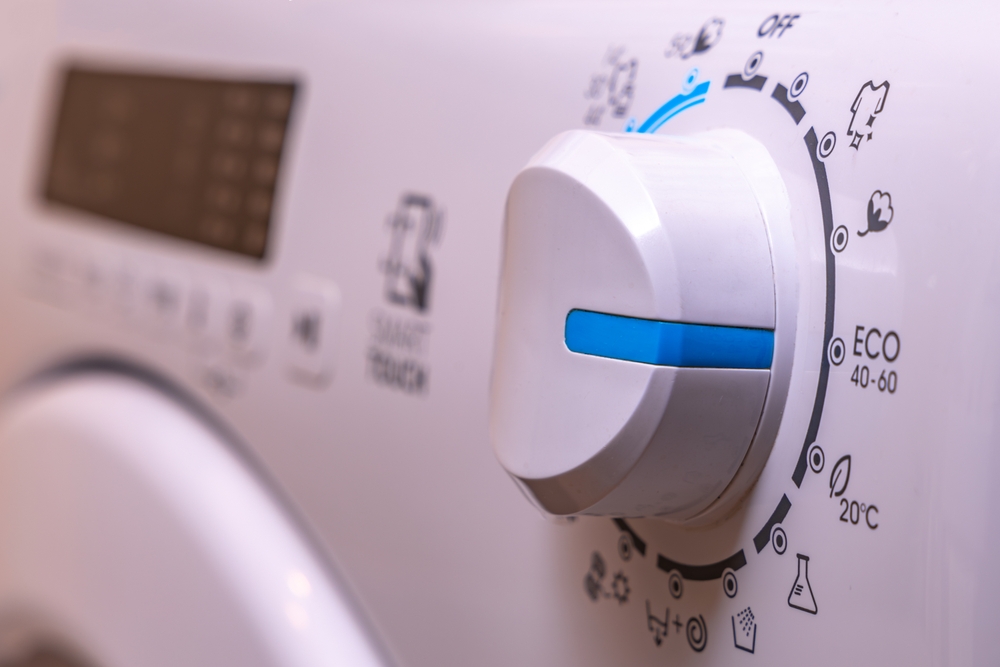
You might not think about it when selecting a washing mode, but heating water is one of the most energy-intensive parts of the washing process.
- Cold water wash: lowest energy usage
- Warm water wash: moderate consumption
- Hot water wash: highest energy use
If you switch from hot to warm or cold water, you can significantly reduce your washing machine’s power consumption without sacrificing cleaning performance for most loads.
3. Load Size
Another factor is the load size. You might not like storing unwashed clothes to wash them together, but realizing that running many small loads increases overall energy use can change your mind. Washing full loads maximizes efficiency and reduces electricity per garment.
4. Machine Efficiency Rating
One important characteristic to consider when looking for a new washing machine is the efficiency rating. Modern technologies aim to provide maximum results with less energy use. The modern machines often carry Energy Star or similar efficiency certifications, which indicate lower energy and water consumption. Note that knowing how many gallons of water a washing machine uses can help you better estimate total energy demand and potential savings.
Just imagine that an older washing machine may use two to three times as much electricity as a newer, energy-efficient model.
Average Cost of Running a Washing Machine
Let’s estimate the electricity cost of washing laundry for 5 loads a week:
- Loads per week: 5
- Average load power consumption: 0.7 kWh
- Weekly consumption: 3.5 kWh
- Annual consumption: ≈182 kWh
If electricity costs $0.20 per kWh, annual washing machine costs would be:
182 × $0.20 = $36.40 per year
While that may seem modest, the cost increases when combined with the costs of dryers, water heaters, and other appliances. Households with larger families or frequent laundry loads may spend significantly more.
Furthermore, yearly spending depends on state and regional electricity rates.
The table below estimates washing machine electricity costs by state, using average residential electricity prices from the U.S. Energy Information Administration (EIA). The estimate uses 0.7 kWh as the typical energy consumption of a washing machine, based on an average of 5 loads per week (≈260 loads per year).
| State | Avg Electricity Price (¢/kWh) | Cost Per Load (0.7 kWh) | Estimated Cost Per Year (260 loads) |
| California | 34.31¢ | $0.24 | $62.46 |
| New York | 24.66¢ | $0.17 | $44.88 |
| Florida | 15.92¢ | $0.11 | $28.98 |
| Texas | 15.30¢ | $0.11 | $27.85 |
| Illinois | 15.96¢ | $0.11 | $29.04 |
| Ohio | 15.66¢ | $0.11 | $28.50 |
| Pennsylvania | 18.22¢ | $0.13 | $33.16 |
How a Solar Washing Machine Can Help You Save On Electricity Bills
Using solar energy is an effective way to reduce or eliminate the cost of household appliances. The washer is one of the most frequently used appliances; thus, operating a solar washing machine can significantly affect your electricity use. Additionally, once you decide to go with solar energy, you will benefit from savings on other energy-consuming appliances, like the dishwasher, dryer, air conditioner, and fridge.
Let’s have a look at the average energy use of common household appliances:
| Appliance | Average Energy Use (kWh per year) |
| Washing machine | 80–340 |
| Dishwasher | 180–300 |
| Refrigerator | 400–800 |
| Electric dryer | 700–1500 |
| Air conditioner | 1000–3500 |
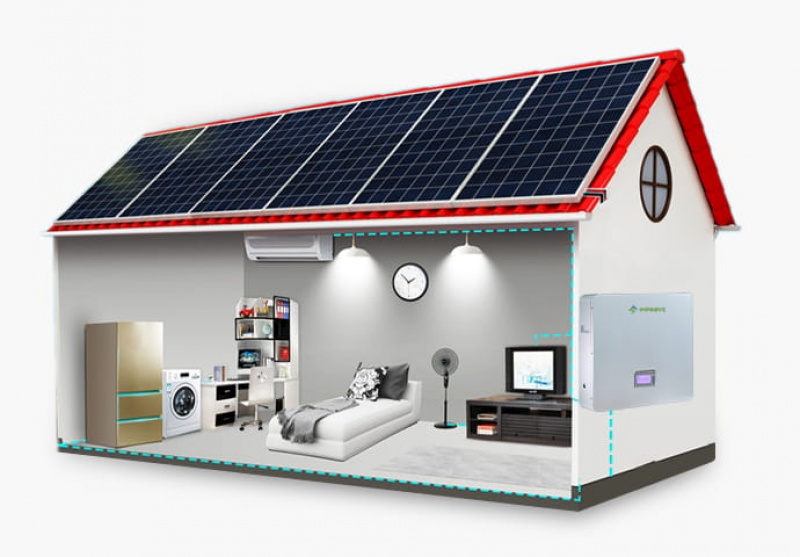
Adding a battery to your solar system allows you to use green energy at any time, even during a blackout, and you can sell excess energy.
Ready to go solar today? Don’t hesitate and get your free solar quote now!
Other Benefits of a Solar System
Besides free washing cycles and lower electricity bills, you get many more benefits from using solar energy to power your home:
| Energy Independence | Even when electricity prices go up, you still use your solar energy for free. Adding a battery to your solar system guarantees electricity 24/7, even during blackouts. |
| Extended Cost Savings | Many homeowners hesitate to go solar because panel installation requires an upfront investment, but the system pays off over time through lower energy bills and incentives. |
| Environmental Impact | Traditional electricity is mostly generated from fossil fuels, whereas solar energy reduces the greenhouse gas emissions associated with electricity consumption. |
Tips to Reduce Washing Machine Energy Consumption
On top of using a solar washing machine, there are several other ways to reduce your electricity use:
- Pick washer models that use less energy. Pay attention to the energy rating of the washing machine when you buy a new one. An energy-efficient washer will reduce overall energy consumption.
- Try to use cold water. Modern detergents perform effectively in cold water, so there’s no need to use hot water for every cycle. Try to use cold cycles as much as possible to save on energy consumption.
- Wash Full Loads. Running fewer, fuller loads makes things work better and uses less electricity overall.
- Dry laundry in the air. Keep in mind that electric dryers use much more electricity than washing machines. When possible, air-drying will also help you save.
Source: MJK Power
Is a Solar Washing Machine Worth It?
If you consider long-term savings, a solar energy system is definitely worth it. At first glance, the energy consumption of a washing machine may appear minimal, but its frequent use, combined with other home appliances, can add up to a significant amount.
Likewise, if you zoom out, you’ll see that your electricity consumption is growing all the time because you need to power all the new devices that appear on the market. This is why electricity prices are growing, and this is why you need a strategy to minimize costs.
The good news is that even a simple solar system can reduce the energy used by common household items like lights, laundry machines, and electronics.
So if you want to save money on electricity bills, start by choosing energy-efficient appliances, then optimize your laundry habits, and then consider powering your washing machine and possibly other devices with solar energy.
FAQ
How many watts does a washing machine use per load?
Washer power consumption ranges from 0.3 to 1.3 kWh per load. The exact number depends on cycle settings and mainly on water temperature. The efficiency rating of your washing machine will also affect overall energy use.
Does cold water washing save electricity?
Yes. Heating water accounts for a large portion of the washer's energy consumption during laundry cycles. Washing with cold water can reduce the washer’s electricity use.
Can solar panels power a washing machine?
Yes, as well as other household appliances. Commonly, a residential solar panel system produces far more electricity than a washing machine requires, making it easy to power laundry cycles using solar energy.
What washers use the least electricity?
Front-loading, high-efficiency models typically use less electricity and water than traditional top-loading machines.